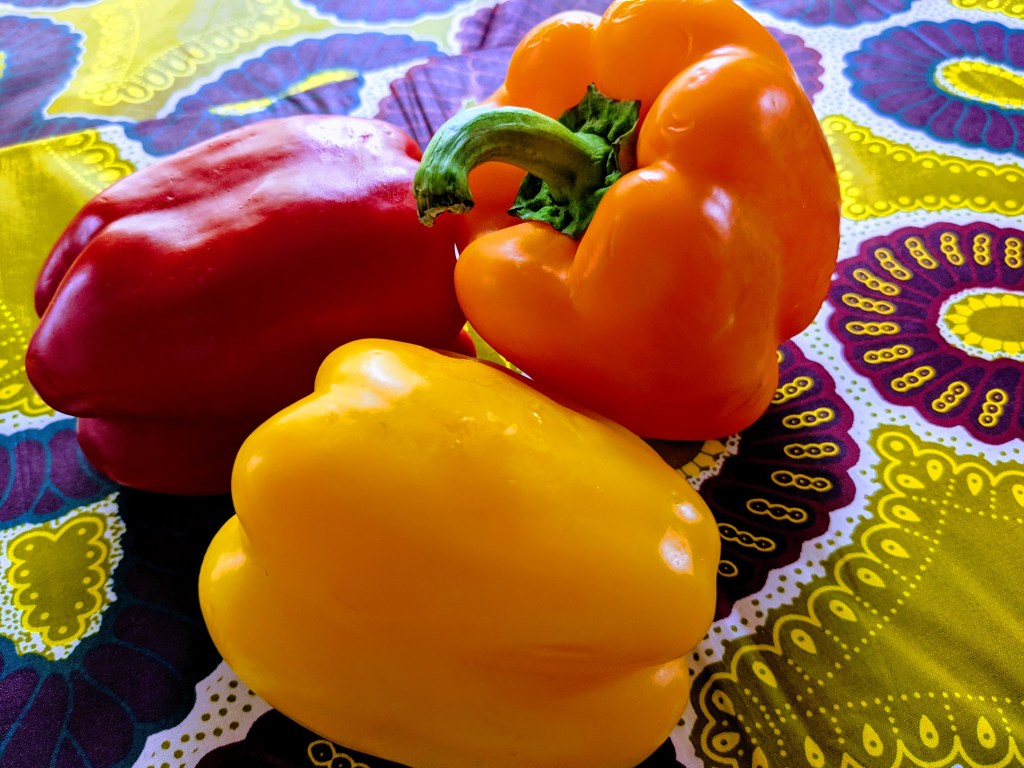
Ahh bell peppers, sweet, crunchy, and in my opinion the perfect vegetable (or is it a fruit? hmm) to snack on raw. I like to stock up on them especially when I catch them on sale at my local grocery store and use them through out the week either for snacks or cooking. From my experience, they can keep for up to a week in the refrigerator before they start to loose some water content and start to shrivel. The easiest way to cut a bell pepper is by holding it by the stem and cutting around it. By doing this, you avoid making a mess with the seeds and membrane (white part)
Methods of preparation
Stir-fry: Bell peppers are a great addition to your stir-fry recipes but take care not to overcook them especially if you like yours saucy. Consider adding the peppers last if that’s the case.
Saute: I like to pair them with zucchini, mushrooms and onions when I want a quick side for a meal. Cut your peppers the same way you cut the other vegetables for a uniform look i.e., diced, sliced, etc.
Soups and stews: I like to dice them small and add to soups and stews after cooking (they should soften enough from the heat)
Stuffed: Wash and cut them lengthwise without removing the stem, scrape the membrane and stuff them with a mixture of meat and rice and top with some cheese and bake. ( If you’re in a hurry, steam the halves first for about 5 minutes then stuff them)
Raw: Eat them raw sliced or diced. This is my favorite way of eating them especially when I dip them in some hummus.
If you’re like me and have a picky eater on your hands, hide them while cooking by processing them in the food processor (or by finely chopping them) and throw them in soups, stews, spaghetti sauce or my favorite in meatballs. My son absolutely hates bell peppers and I have introduced them in so many different ways so many times. My favorite excuse of his is “they give me goose bumps”. So for now I will continue to hide them.
So what are the nutrition benefits of eating bell peppers you wonder? Keep reading….
Vitamins & Minerals
Vitamin C: Just 1/2 a cup of a diced red bell pepper contains as much as 169% of the Reference Daily Intake for vitamin C. That’s more than 1 medium orange can provide. Vitamin C also enhances iron absorption so pair it with good sources of iron to increase iron absorption.
Vitamin B6: Important for metabolism, immune function, and brain development during pregnancy.
Potassium: Heart health
Vitamin K: Blood clotting
Vitamin A: Found in red bell peppers as beta-carotene which the body converts into vitamin A
Carotenoids: Carotenoids give the bell peppers the pigments of yellow, red and orange. They are powerful antioxidants which can help protect the cells from free radicals. Therefore, antioxidants may help prevent the development of chronic diseases.
Follow me on instagram @wholesomeflavor
Drop a comment below and share how you like to enjoy your bell peppers.
 Deliciously Wholesome